Menu
Description

Klaus Paier Asja Valcic Quartet - Cinema Scenes

CD / digital

Klaus Paier accordion, bandoneon
Asja Valcic cello
Stefan Gfrerrer bass
Roman Werni drums & percussion


“So beautiful, it brought tears to the eyes” ran the headline of a live review of Klaus Paier and Asja Valcic in Munich’s respected Süddeutsche Zeitung. And London’s The Observer remarked, “their pieces evolve with such vigour and clarity... the music sounds like the product of one mind rather than two... its charm is all its own”.

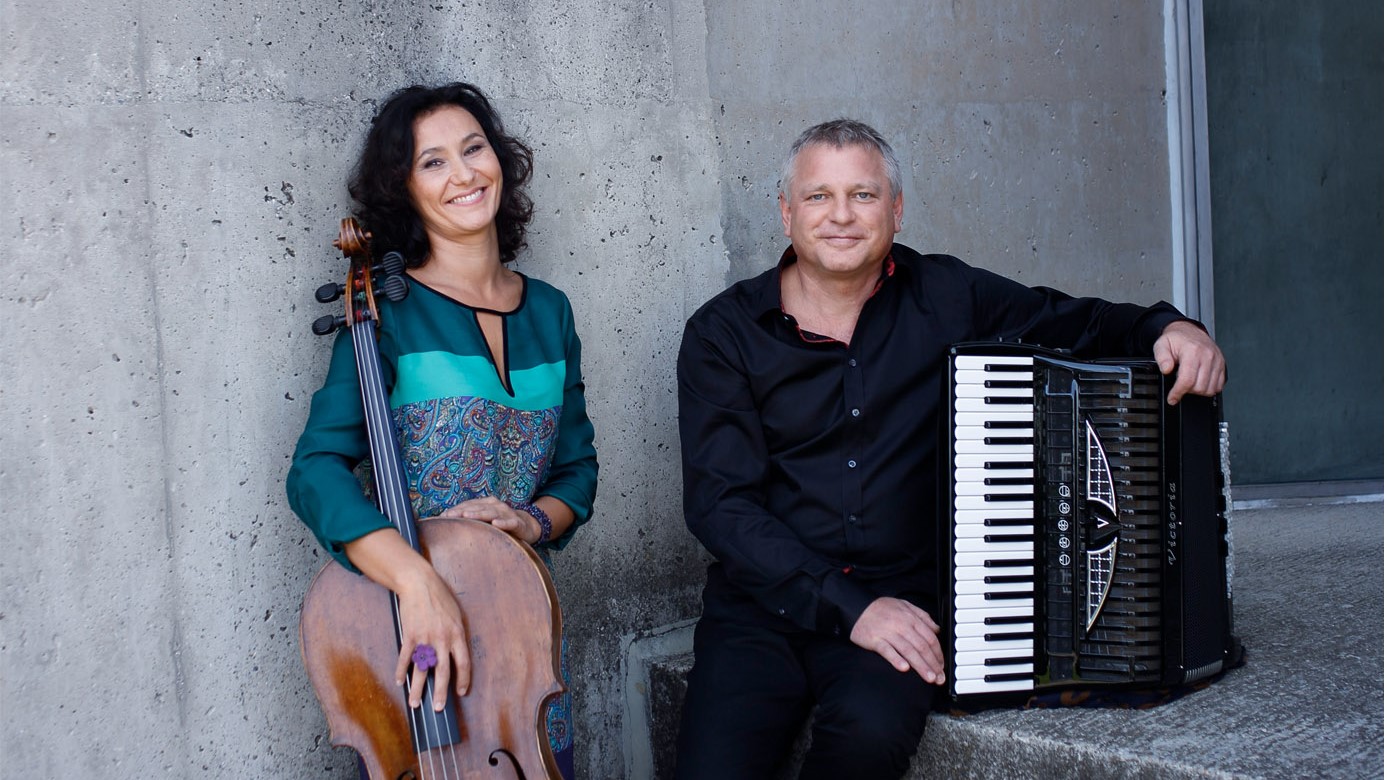
Paier and Valcic’s music is always sensual and rich in images, and this opulence of colours and pictures is also at the heart of what “Cinema Scenes” is about: they let their impressions of films flow freely as music, but above all the two musicians give expression to their own visual ideas. This music seems to be just asking to be seen on a bigger canvas, and therefore the duo is augmented. In the quartet format one senses an extra groundedness, but presence of the other voices also brings a fascinating potential for new departures.
Just as films in their unique way are wont to do “Cinema Scenes” does also take us on a journey. It might be just the shortest of trips out into the garden: in “Le Jardin” an irresistible melody sets us dreaming. Or the destination might be out in the wider world: “Safran” has a powerful oriental aura. Or it could be a short roam with dramatic interruptions, such as “Inspired Tale”. Just as in a movie, a broad palette of feelings and thoughts is evoked in this album. “Griet’s Theme” from the movie “The Girl With The Pearl Ear-Ring” brings a combination of confusion, disquiet, and bittersweet sadness – all at ferocious speed. The title track is in four parts, starting with an arrangement of “Doe Eyes”, which was written for “The Bridges of Madison County”, and then driven forward by Paier’s own ideas. It combines everything from nostalgic longing and awestruck silence, to angry protest and the joy of triumph.

Everything is dramatized superbly by the four musicians, whether they are doing virtuosic expositions of melodies, incorporating propulsive latin rhythms (in “Hesitation”) or even a full-on jazz hoe-down (in “Griet’s Theme”). There is an overarching dramatic pattern to this album, but each of the individual pieces also leaves its mark, carrying its own tension and excitement – and the thematic connection to the cinema. 

That is particularly true of Asja Valcic’s nervy, wildly stop-go piece “Rush” which is full of unexpected escapades, and also of the last piece on the album, “Ricochet”. If the idea of a detective story somehow lands in the listener’s mind, then he or she should hold that thought, because an action plot really does develop in this piece, from its sultry and still beginning as if sweltering under a midday sun, to a speeding-up of the action and right on through to a happy ending.

Not just this piece, the whole of “Cinema Scenes” has a special way of hitting the mark, of showing us the movies at their absolute best.


Credits:
Produced by the artists
Recorded by Christoph Burgstaller at Step/Völkermarkt, January 2017
Mixed by Christoph Burgstaller
Mastered by Klaus Scheuermann
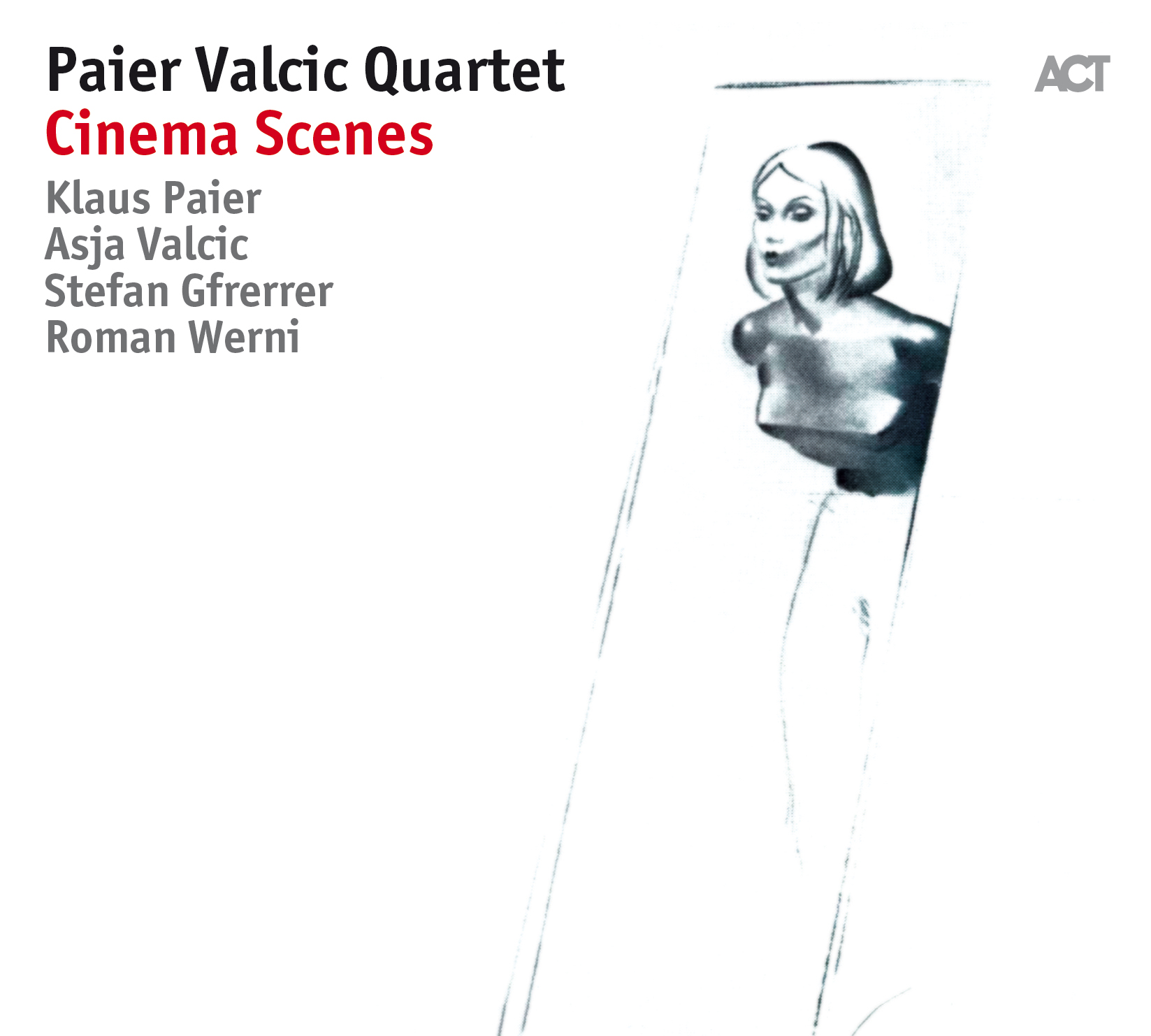
The Art in Music: Cover art by Allen Jones, untitled 81 (Lady Mirror), 1981, ACT Art Collection

Artists: Klaus Paier, Klaus Paier - Asja Valcic
Instrumentation: Big Band & Ensembles
Manufacturer information

ACT Music + Vision GmbH & Co.KG
Hardenbergstr. 9
D-10623 Berlin

Phone: + 49 - (0) 30 310 180 10
E-Mail: info@actmusic.com

Klaus Paier - Asja Valcic

Vision for Two - 10 Years
Klaus Paier & Asja Valcic - Vision for Two - 10 YearsCD / digital Klaus Paier accordion & bandoneon Asja Valcic cello Accordionist Klaus Paier and cellist Asja Valcic have been making music as a duo for ten years. Their playing has kept audiences delighted and critics enthralled: "Breathtaking," said the magazine Der Spiegel; they are "a captivating match" (The Guardian). During this time the two have recorded four albums which have received numerous awards. The duo’s journey together began in 2009 with their debut album "À Deux", and since then Paier and Valcic have proceeded to make their unique accordion-plus-cello sound into a thing of wonder. The titles of the previous albums by these two musicians, who live in Austria, give pointers to the elements that go into the making of their acts of musical creation: in 2013 their path together continued with "Silk Road", followed by "Timeless Suite" (2015), which in turn led to the more opulent "Cinema Scenes", for quartet. The sound is always their starting point: they have a finesse and eloquence from classical music, combined with the free-thinking, quicksilver instinctiveness of jazz, and influences from many parts of the world. And what results is capacious, widescreen music. This tenth anniversary album "Vision for Two – 10 Years" is to some extent a conspectus, but also shows how this visionary duo continue to reinvent themselves and refresh their outlook. A panoply of what they have achieved musically is right there from the start of the title track: The pure tone of the accordion introduces the thematic material, and also gives it a sense of pulse and flow. The cello picks up the theme and extends it into a dramatic, elegiac arc. An interlude shifts the mood, as the rhythm starts to quicken, and sounds from the Southeast of Europe enter the mix. A jazz-infused improvisation takes up these musical ideas and leads us towards the culmination and conclusion of the piece when the theme is taken up again for one last time. Immediately after that, the cello introduces the second track "Moment of Lightness" with a prelude that comes practically out of nowhere. The accordion enters the fray with some contrapuntal deconstructions. The album carries us with it, keeps wending its way, and is never less than totally spellbinding. Paier and Valcic invite listeners to immerse themselves in a sound world which is fascinatingly multi-layered. What the listener can hear in "Vision for Two" is not just the way the partnership and interplay have been perfected over ten years, but also a combined story which goes back much further. Both Paier and Valcic have their musical origins in the classical domain. Klaus Paier studied in Klagenfurt with Rudolf Pillich, but from the age of ten he was writing his own pieces and developing his own tonal language. "I soon ended up exploring jazz during my studies," he remembers. The great jazz composers from Ellington and Basie to Monk and Mingus were early inspirations. He absorbed more and more influences and merged them all into a style which is his own and unmistakable, and continued to develop a universal and constantly evolving musical language. Always starting from the sound, Paier, as a visionary, was also working on his "hardware" from an early stage. After constantly improving and rebuilding his accordions and bandoneons in order to "get rid of the wheezing" of the instrument and make it even more direct, easier and adaptable to play, he has now had a completely custom-made accordion built for him, with perfect sound characteristics and an extension to the instrumental compass. This new instrument is being used for the first time on "Vision for Two", and bears the completely appropriate name "Passion". Asja Valcic shares the same passion. After her classical education in Zagreb, Detmold and at the Tchaikovsky Conservatory in Moscow she started an award-winning career as a soloist. But she, too, has been searching for new means of expression beyond classical music. In 2004 she became a founder member of the radio.string.quartet.vienna, which evolved from a project of Klaus Paier. She also expanded her stylistic range more and more in the direction of improvisation through her collaboration with jazz musicians such as the violinist Adam Bałdych and the pianist Iiro Rantala (in whose string trio she still plays). Just like Paier, Valcic combines an outstanding classical technique, a love of stylistic openness and complete freedom in her playing. Her exceptional achievements and unique standing as a cellist have been frequently commented on in the international media.The tracks of "Vision for Two" demonstrate this duo’s unique compositional talent and creativity – and also their capacity to dream. "Straight Thirteen" has an infectious groove, its repeated melodic hook set against a lively asymmetric beat. "Angela" has a melancholy and dramatic feel, "Hidden Thread" has impressionistic colours, and "A Love's Delight" more than a hint of South America. While Valcic salutes Debussy in "Dans l'esprit de Debussy", Paier pays a swinging homage to Mozart ("Mozart Incognito"). The album comes to a close with the bandoneon ballad "El Alba". But just before that final tune there is a short, highly percussive Latin blues number, and its title neatly sums up where Paier and Valcic now see themselves as they mark a decade of music-making: "Moving On". They have indeed achieved remarkable things through their vision of dialogue and interplay – and intend to do much more.Credits: Recorded by Christoph Burgstaller Mixed by Christoph Burgstaller Mastered by Klaus Scheuermann Produced by Klaus Paier & Asja Valcic

€17.50*
Cinema Scenes
Klaus Paier Asja Valcic Quartet - Cinema ScenesCD / digital Klaus Paier accordion, bandoneon Asja Valcic cello Stefan Gfrerrer bass Roman Werni drums & percussion “So beautiful, it brought tears to the eyes” ran the headline of a live review of Klaus Paier and Asja Valcic in Munich’s respected Süddeutsche Zeitung. And London’s The Observer remarked, “their pieces evolve with such vigour and clarity... the music sounds like the product of one mind rather than two... its charm is all its own”.Paier and Valcic’s music is always sensual and rich in images, and this opulence of colours and pictures is also at the heart of what “Cinema Scenes” is about: they let their impressions of films flow freely as music, but above all the two musicians give expression to their own visual ideas. This music seems to be just asking to be seen on a bigger canvas, and therefore the duo is augmented. In the quartet format one senses an extra groundedness, but presence of the other voices also brings a fascinating potential for new departures.Just as films in their unique way are wont to do “Cinema Scenes” does also take us on a journey. It might be just the shortest of trips out into the garden: in “Le Jardin” an irresistible melody sets us dreaming. Or the destination might be out in the wider world: “Safran” has a powerful oriental aura. Or it could be a short roam with dramatic interruptions, such as “Inspired Tale”. Just as in a movie, a broad palette of feelings and thoughts is evoked in this album. “Griet’s Theme” from the movie “The Girl With The Pearl Ear-Ring” brings a combination of confusion, disquiet, and bittersweet sadness – all at ferocious speed. The title track is in four parts, starting with an arrangement of “Doe Eyes”, which was written for “The Bridges of Madison County”, and then driven forward by Paier’s own ideas. It combines everything from nostalgic longing and awestruck silence, to angry protest and the joy of triumph.Everything is dramatized superbly by the four musicians, whether they are doing virtuosic expositions of melodies, incorporating propulsive latin rhythms (in “Hesitation”) or even a full-on jazz hoe-down (in “Griet’s Theme”). There is an overarching dramatic pattern to this album, but each of the individual pieces also leaves its mark, carrying its own tension and excitement – and the thematic connection to the cinema. That is particularly true of Asja Valcic’s nervy, wildly stop-go piece “Rush” which is full of unexpected escapades, and also of the last piece on the album, “Ricochet”. If the idea of a detective story somehow lands in the listener’s mind, then he or she should hold that thought, because an action plot really does develop in this piece, from its sultry and still beginning as if sweltering under a midday sun, to a speeding-up of the action and right on through to a happy ending.Not just this piece, the whole of “Cinema Scenes” has a special way of hitting the mark, of showing us the movies at their absolute best. Credits: Produced by the artists Recorded by Christoph Burgstaller at Step/Völkermarkt, January 2017 Mixed by Christoph Burgstaller Mastered by Klaus Scheuermann The Art in Music: Cover art by Allen Jones, untitled 81 (Lady Mirror), 1981, ACT Art Collection
€17.50*
Product Quantity: Enter the desired amount or use the buttons to increase or decrease the quantity.
Timeless Suite
Klaus Paier & Asja Valcic - Timeless SuiteCD / digital Klaus Paier accordion, bandoneon Asja Valcic cello BACH, JAZZ AND DANCEAccordion and cello. A rare combination, but no less remarkable is the sound of the Klaus Paier and Asja Valcic duo. Is it jazz, classical or world music? Old, new or crossover? Whatever it is, the music is timeless, intense, always surprising, and transcends genre borders. The quest for the perfect sound of accordion and bandoneon led Klaus Paier to an entirely new, unique playing technique that allows his instrument to breathe and gives him the space for unrivalled stylistic and improvisational freedom, and in no way does Asja Valcic take a back seat. She plays her “cello, that can foot it like a double bass” with “an incredible wealth of variations” (KulturSPIEGEL). In combination, this dream team displays “an unconventional beauty for which we lack any comparison. Energetically-breathing chamber music, in which the composition and improvisation are fascinatingly linked” (Frankfurter Allgemeine Zeitung). On “Timeless Suite”, Paier and Valcic accentuate their roots in occidental art music. A suite is a form of music that contains successive pieces, mostly dances, and here the two have brought together eleven dances and dance related themes for the album. New compositions and classical oeuvres are developed and enriched with improvisation. Jazz and tango, waltzes and baroque music mingle as if they were always meant to be together. For “Incontro Con Stravinsky”, for instance, Paier uses Igor Stravinsky’s ballet music “Pulcinella”, which harks back to the Italian baroque composers Pergolesi and Gallo. For Valcic, on the other hand, the music of Johann Sebastian Bach is a decisive inspiration, especially in her interpretation of “Sarabande” from the Bach suite No. 5 in C Minor for cello. “Maestoso & Melodioso”, composed for bandoneon and cello, and the spirited “Saskia’s Dance”, in which part of Bach’s Toccata and Fugue in D Minor is invoked, are also inspired by the great German composer. “Inside A Flower” and “Amelie’s Fairy Tale” provide the balladesque moods between the dances of the suite. “Vocalmente” makes sure there is also a slow tango on “Timeless Suite”. “Green Rondo” is an original jazz piece based on the Dave Brubeck classic “Blue Rondo A La Turk”. “Timeless Suite” merges the past with the present in an unmistakable and unique way. Curiosity and courage are the outstanding virtues here that unite these two adventurous musicians in a congenial alliance. It is a scintillating dance that one hopes will never end.Credits: Produced by the artists Recorded by Christoph Burgstaller at Carinthische Musikakademie Stift Ossiach, Feb. 23 - 25, 2015 Mixed by Christoph Burgstaller. Mastered by Klaus Scheuermann Oblivion recorded live at the Intern. Accordion Festival Vienna, Feb. 22, 2014

€17.50*
Magic Moments 6 "In The Spirit of Jazz"
70 minutes of the best jazz infotainment through the current ACT line-up at a special price.

€4.90*
Silk Road
Klaus Paier & Asja Valcic create captivating sound journeys with accordion & cello—unique and harmonious.

€17.50*
À Deux
"Breathtaking: bittersweet accordion sounds and a cello that can march like a double bass. Eurojazz at its best." - SPIEGEL "CD of the MONTH" in STEREO and FONOFORUM.

€17.50*